Money-mule scams: Protect your bank account & UPI
Practical guide on money mule scams: how fraudsters recruit you, how UPI/bank accounts are abused, your legal risk and step-by-step actions Indians should take if targeted.

Money-mule scams recruit you to receive or transfer stolen money through your bank or UPI. If contacted, stop, do not share details, inform your bank immediately, report to the National Cyber Crime Helpline (1930) and file a complaint at cybercrime.gov.in to limit loss and legal risk.
Key takeaways
- Scammers use fake jobs, reseller/return schemes and OTT/refund stories to convert accounts into mule accounts.
- Do not share OTPs, bank/UPI credentials, or hand over SIMs; that’s how accounts are hijacked.
- If targeted or compromised: tell your bank, call 1930, report at cybercrime.gov.in and preserve evidence.
- Victims can be criminally liable; quick reporting and bank freezes reduce damage and help investigations.
- Use bank alerts, strong KYC practices and avoid offers promising easy commissions.
In this article
How the scam works (step by step, as the victim experiences it)
Fraudsters recruit ordinary people to act as «money mules» — accounts that receive, move or withdraw money from cybercrime. Below is a typical victim journey, simplified into steps you may see.
- Initial contact: You get a message, call or ad offering part‑time work, high commission on “reseller” sales, easy refunds for OTT/online shopping returns, or a peer-to-peer payment job. Contacts arrive on WhatsApp, Telegram, social media or classifieds.
- The pitch: They promise simple tasks — receive payments and forward them, or accept “test” deposits and send them out — with a commission (5–20%). They insist it’s legal and give plausible stories about payment failures, refunds or resales.
- Gaining access: They ask for account details: account number, IFSC, UPI ID and sometimes more — OTPs, netbanking login, debit card details or even the SIM card used for the mobile number linked to the bank account.
- Initial transactions: A small amount (or large) is transferred into your account. You are told to transfer it out to another account, keep your cut and repeat. Sometimes they ask you to withdraw cash and hand it over to a courier or courier-like contact.
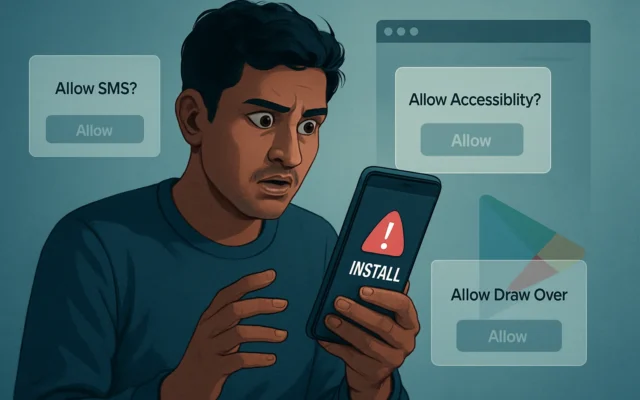
- Escalation or takeover: If you share OTPs, banking passwords or give physical access to the SIM, the fraudsters can add beneficiaries, enable UPI, change settings and fully control your account. They may also ask you to install apps that forward SMS/OTP to them.
- Layering and laundering: The fraudster fragments funds across many accounts, converts to wallets or crypto, or withdraws cash. Your account becomes one of many used to launder proceeds of fraud or theft.
- Aftermath: Banks or law enforcement may freeze your account after detection. You may get calls from police asking for statements. If you were knowingly receiving illicit funds your account could be treated as used for money‑laundering; if you were duped, you will still need to prove you were a victim.
Red flags to spot
- Unsolicited job or ad promising quick, high commissions for simple money transfers.
- Requests to receive money and forward it, or to accept “refunds” or “test payments.”
- Pressure to share OTP, netbanking password, UPI PIN, or to install SMS forwarder apps.
- Requests to hand over your SIM, ATM card or KYC documents for “verification” or to open accounts for them.
- Offers that ask you to use your account for receiving payments from unknown sources repeatedly.
- Messages that discourage contacting your bank or ask you to use private channels for “manager” approval.
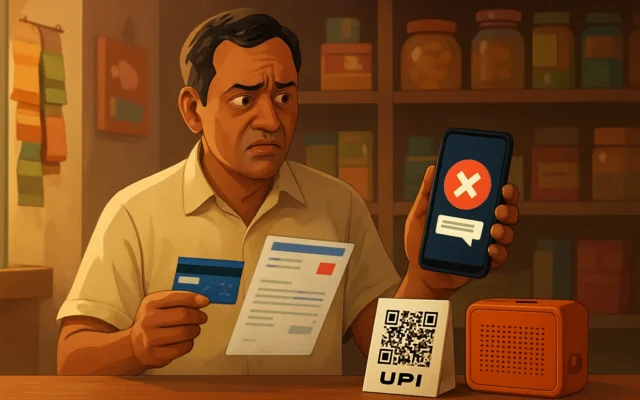
Also read: UPI Vyapaar Saksham scams: spotting fake QR and soundbox offers · Malicious UPI APKs: How to spot fake UPI apps like iBazo
What to do if you have been targeted
Act immediately. Quick steps can limit financial loss and reduce legal trouble.
- Stop all communication. Do not reply to the fraudster or follow any further instructions.
- Do not share any more OTPs, UPI PIN, netbanking credentials, debit/credit card numbers or Aadhar/KYC photos.
- Inform your bank immediately. Ask them to block transfers, freeze the account if unauthorised transactions have occurred, and to reverse suspicious credits where possible. Tell them the exact transaction IDs, dates and amounts.
- Call the National Cyber Crime Helpline — 1930. This is the government helpline for cybercrime assistance. Use it to get immediate guidance and to register the incident.
- File a complaint at cybercrime.gov.in. Use the National Cyber Crime Portal to report the incident; attach screenshots, messages, transaction details and any caller IDs.
- Preserve evidence. Save chat screenshots, call logs, transaction SMS, bank statements, emails and any courier receipts. Don’t delete messages even if embarrassing.
- File a police FIR if advised. Local cyber police or state police cyber cells will take FIRs and coordinate with banks and I4C (Indian Cyber Crime Coordination Centre) on investigations.
- Check for identity misuse. Monitor your credit report and bank statements. If KYC documents were shared, inform Aadhar/UIDAI as needed and follow their guidance.
- Cooperate with investigators. Provide complete, honest statements. Prosecutors consider prompt reporting and cooperation when assessing intent and liability.
How to stay safe
Preventive measures are simple and effective. Treat money-mule offers like obvious scams.
- Never share OTPs, UPI PIN or netbanking passwords. No bank or legitimate employer will ask for them.
- Refuse to hand over your SIM, ATM card or KYC documents. Keep those private and securely stored.
- Enable transaction alerts and limits. Turn on SMS and app alerts for banking and UPI, and set daily transaction limits where possible.
- Use official bank apps and NPCI/UPI protections. Don’t install unknown apps; avoid third‑party “helper” tools that request SMS/notification access.
- Be sceptical of high-commission offers. If it sounds too easy, it probably is illegal. Ask for written contracts and verify companies independently.
- Keep KYC up to date with your bank. Banks that know your activity profile flag anomalous transfers faster; inform the bank if you notice suspicious account use.
- Learn common recruitment patterns. Fraudsters now use fake job posts, reseller/refund jobs and OTT return stories — treat these as high risk.
Why quick reporting matters
The RBI, I4C and banks now use AI tools and shared suspect registries to detect mule accounts. Prompt bank notification and a cybercrime report increase the chance of freezing funds and clearing you as an innocent victim. Slow or no reporting can leave your account implicated in money‑laundering probes.
When can a victim be legally liable?
Each case differs. If you knowingly receive and move proceeds of crime you can face criminal charges under anti‑money laundering laws. But if you were deceived and promptly reported the fraud, investigators generally treat you as a victim. Full cooperation and documented evidence are key to avoiding charges.
Important: If you are in immediate danger or money is being withdrawn physically, call local police and your bank’s emergency number at once in addition to 1930.
If you’re contacted for a job or quick‑pay scheme, refuse and report it. If your account was used, inform your bank immediately, call 1930 and file at cybercrime.gov.in — fast action reduces financial and legal risk. Stay cautious of unsolicited money offers.
Frequently asked questions
What is a money mule and how do scams use my UPI?
A money mule is an account used to receive, move or withdraw illegally obtained funds. Scammers ask you to accept payments on UPI or bank accounts and then forward them, often taking a commission. Sharing OTPs or giving SIM access lets them fully control your UPI and bank account.
If I accepted money by mistake, will I be arrested?
Not automatically. If you were deceived, reported quickly and cooperated with police and your bank, you’re usually treated as a victim. Concealment or deliberate participation can lead to charges under money‑laundering laws.
How do I report a mule-account scam in India?
Tell your bank immediately and call the National Cyber Crime Helpline 1930. File an online complaint at cybercrime.gov.in with screenshots, transaction IDs and messages. Follow police or I4C instructions for FIRs and investigation.
Can banks reverse mule transfers?
Banks may reverse or freeze suspicious credits if alerted quickly and given transaction details. Success depends on timing, whether funds are withdrawn, and cooperation between banks and law enforcement.
What precautions should students and job seekers take?
Avoid offers that ask you to receive or forward money, provide bank or SIM access, or ask for OTPs. Verify employers independently, use personal bank accounts only for your transactions, and report suspicious offers to authorities.